Case Study
Building a
Multisensory
Brand Experience
Repositioning Volkswagen R from a racing sub-brand into a distinct premium experience — enabling consistent execution and stronger differentiation in the premium segment.

Context
Volkswagen R, the performance sub-brand of Volkswagen, faced a strategic shift from combustion-engine racing heritage to electric mobility. While the core brand evolved, Volkswagen R lacked a clear and differentiated identity — especially for a new premium-oriented audience. The project focused on creating a consistent, scalable brand experience system across digital and physical touchpoints.
Project Partner
Volkswagen R
Duration
8 months
Topics
Branding, Strategy, Experience Design,
Role
Strategic Designer
My Role & Process
My Role
My role on this project was as Experience and Strategic Designer, I co-led the project end-to-end with one team member
- Responsible for stakeholder management, concept development, and delivery
- Presented and defended solutions to C-level stakeholders
- Worked directly with C-level, Product Development, and Marketing
- Co-moderated ideation and prototyping workshops
- Add-On: Independently planned and facilitated a strategic workshop on the EV transition
Process The whole project was defided in two parts after each other (Defining the Styleguide & Guideline for Events & Exhibitions):
- Research & Analysis - Focused on building a deep understanding of the brand, market context, and existing inconsistencies.
- Strategic Framing - Defined the foundation for differentiation and future brand direction.
- Concept Development & Iteration - Translated strategy into tangible directions through an iterative design process.
- System Design (Solution)- Built a comprehensive brand system to ensure consistent and scalable execution.
- Implementation & Enablement - Ensured adoption and long-term usability of the system.
Problem Statement
- Lack of a consistent brand identity across touchpoints
No unified brand system existed across platforms, resulting in fragmented execution. External agencies operated without clear guidance, leading to inconsistent outcomes across markets, formats, and channels.
- Insufficient differentiation from the core Volkswagen brand
As a sub-brand, Volkswagen R is closely tied to Volkswagen’s standards — limiting its ability to establish a distinct identity. This lack of differentiation made it difficult to position VW R as a standalone premium brand.
Challenge
Create a distinct and premium brand identity while staying aligned with core Volkswagen brand.
Core tension:
- Differentiate without disconnecting from the parent brand
- Transition from racing niche → premium performance audience (external and internal)
- Enable consistency across highly diverse contexts (digital, events, global teams)
Research & Insights
Goal of the Phase
Build a fact-based understanding of the market, brand landscape, and current inconsistencies.
Methods used
→ Competitive Benchmarking – Analysis of Volkswagen Group brands and external competitors
→ Brand Touchpoint Audit - Review of existing touchpoints: social media platforms, event formats, event equipment, website
→ Desk Research - Exploration of trends in sustainability, branding, and event design to inform future-oriented solutions
→ Expert Interviews - Interviews with specialists in branding, events, and sustainability to gain industry insights
→ Internal Strategy Analysis – Review of internal documents including personas, target groups, and strategic transformation
Selected Deep Dive
Deep Dive: Mapping Event & Exhibition Ecosystems
ApproachAnalyzed all existing Volkswagen R events and exhibitions and mapped them across key dimensions, including format (e.g. trade fair, brand event, racing event), audience, scale, frequency, and purpose. Based on this, events were clustered into distinct categories to identify patterns, requirements, and opportunities for differentiation.
The same approach was applied to digital platforms to ensure a consistent understanding across all touchpoints.
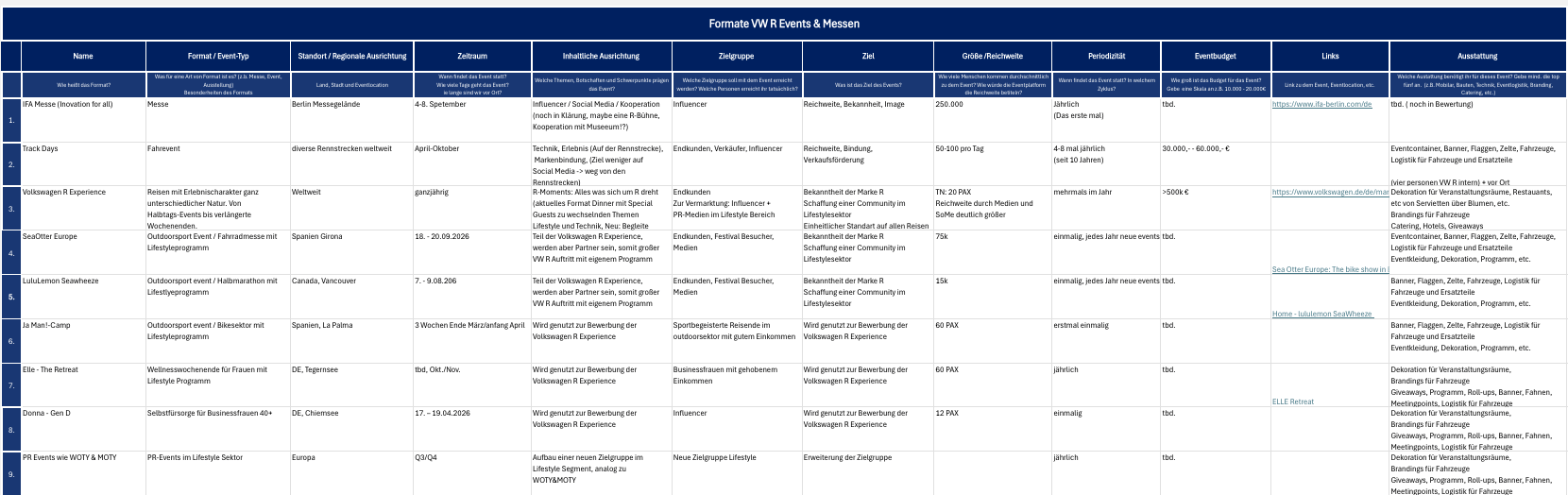

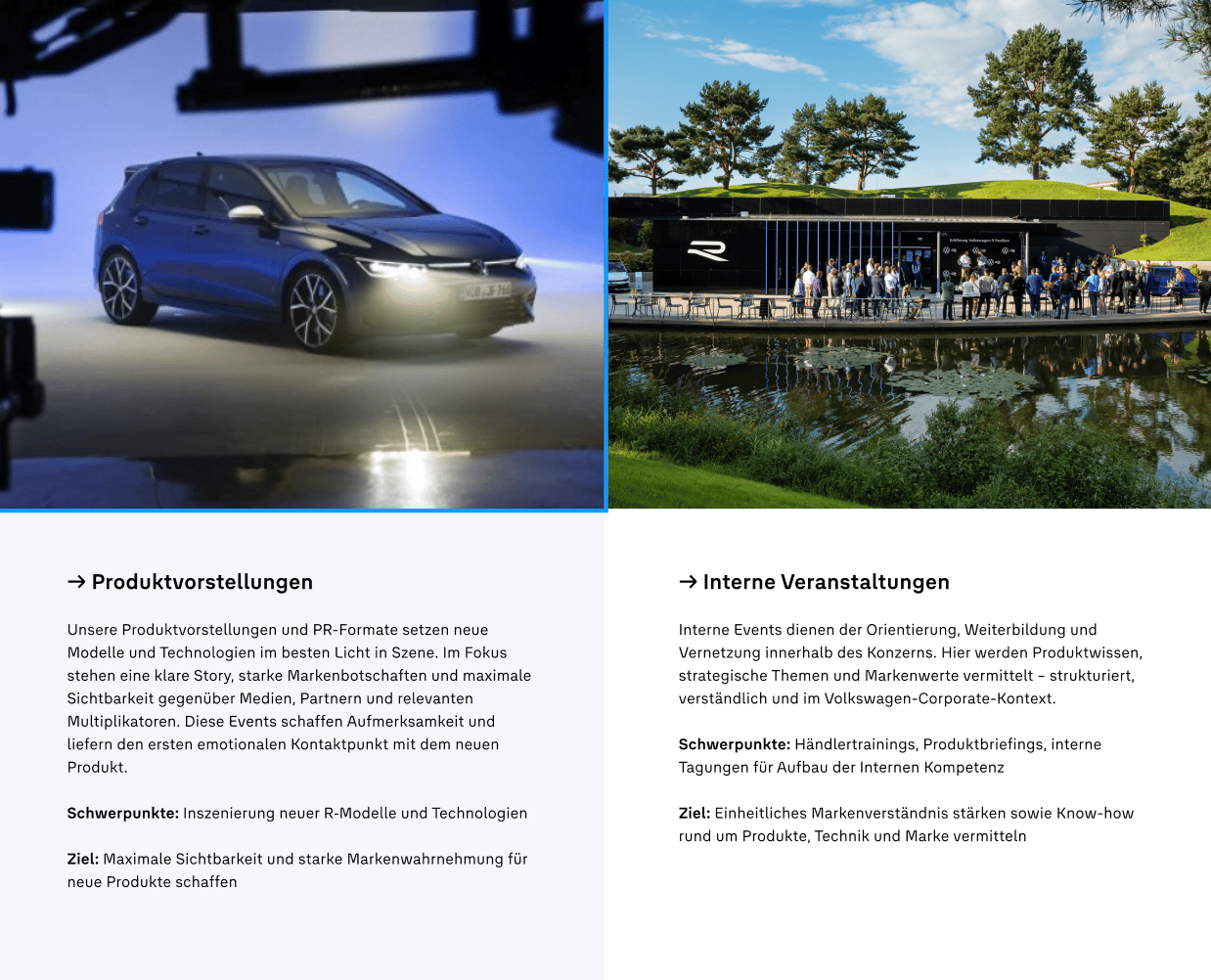
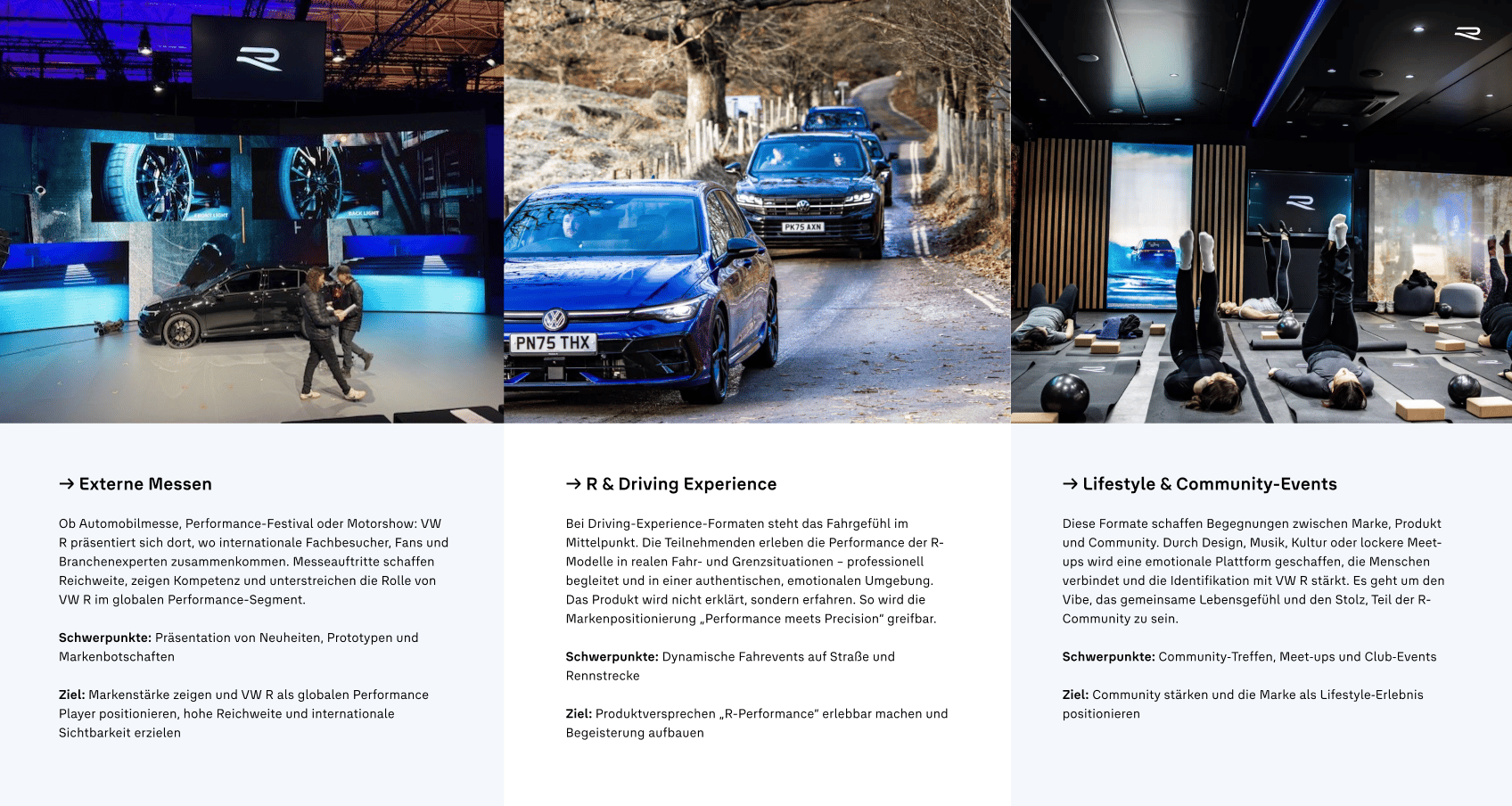
Fig. 1: Matrix of all events and exhibitions; Fig. 2: Cluster of event formats and their goal and focus
Impact
Provided a structured understanding of event types, their goals, and requirements — forming the foundation for scalable guidelines and experience design decisions.
Key Insights
- Overemphasis on functional & educational brand communicationVolkswagen’s communication is primarily focused on functional and educational messaging, with limited emotional or immersive brand experiences.
Sustainability is underutilizedNot systematically integrated into current event and exhibition design.
Brand expression is fragmentedInconsistent tone, visuals, and formats weaken brand perception.
Core inisght
Multisensory experience as a key differentiatorPremium brands increasingly leverage multisensory design (e.g. space, sound, materiality) to create emotional and immersive experiences.
Strategic Decision
Goal of the Phase
ranslate research insights into a clear strategic direction and an actionable brand identity that differentiates VolkswagenR from Volkswagen while remaining aligned with its core DNA.
Methods used
→ Synthesis & strategy workshops – collaborative sessions to align on key insights and define a shared strategic direction
→ Development of principle frameworks – structured framework based on the brand model to guide decision-making
→ Development of brand positioning & value system – Defining the core positioning the brand values as a foundation
→ Iterative stakeholder validation – Continuous alignment and feedback loops with stakeholders
Selected Deep Dive
Deep Dive: A Dynamic Brand Value System
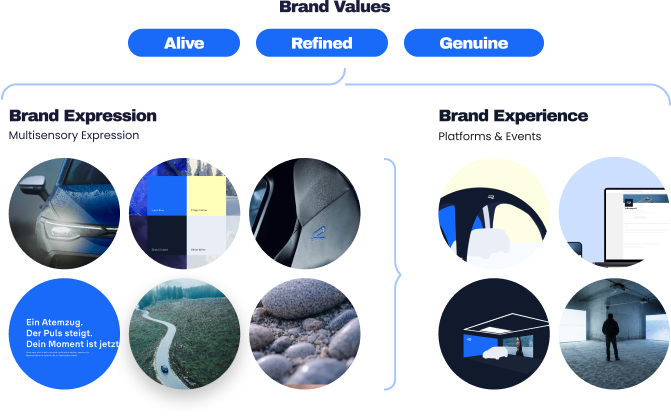
ApproachTo enable flexibility without losing consistency, the brand is built on three core values:
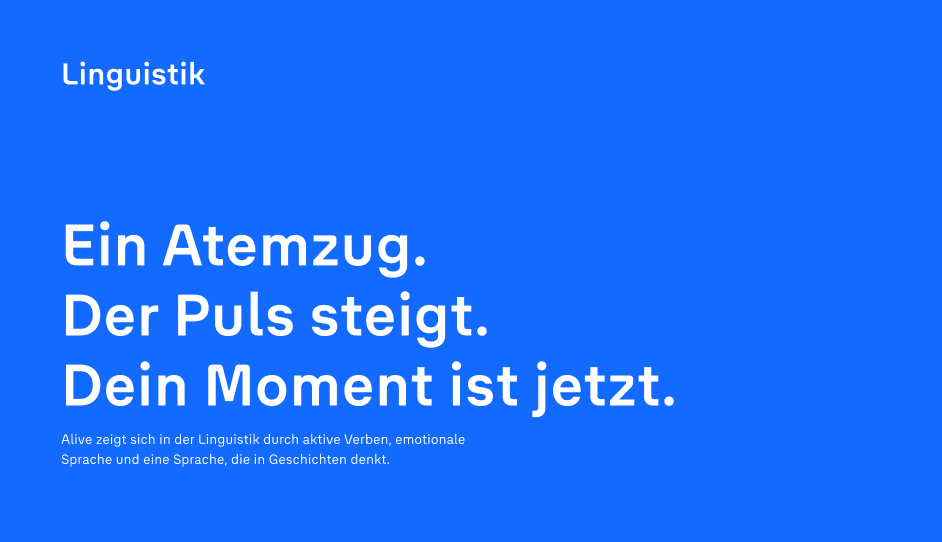
- Alive → energy, movement, dynamism
- Refined → control, precision, premium quality
- Genuine → authenticity, community, shared mindset
These values are not fixed — they function as a dynamic system. All three are always present. One can dominate depending on context. The balance shifts across platforms, content, and experiences
Impact
This system allowed the brand to:
- Stay recognizable across all touchpoints
- Adapt to very different formats and audiences
- Provide clear guidance for decision-making
Strategic Direction
- Adaptable Brand LogicBrand expression adapts based on context using a dynamic balance of core values + diffenret event formats. Instead of fixed guidelines → creation of a flexible, principle-based system
- Repositioning PerformanceFrom racing-focused, external performance → to personal, introspective performance (“Be who you are” as the core narrative) From niche racing enthusiasts → to a premium, self-driven audience valuing focus, individuality, and refined experiences
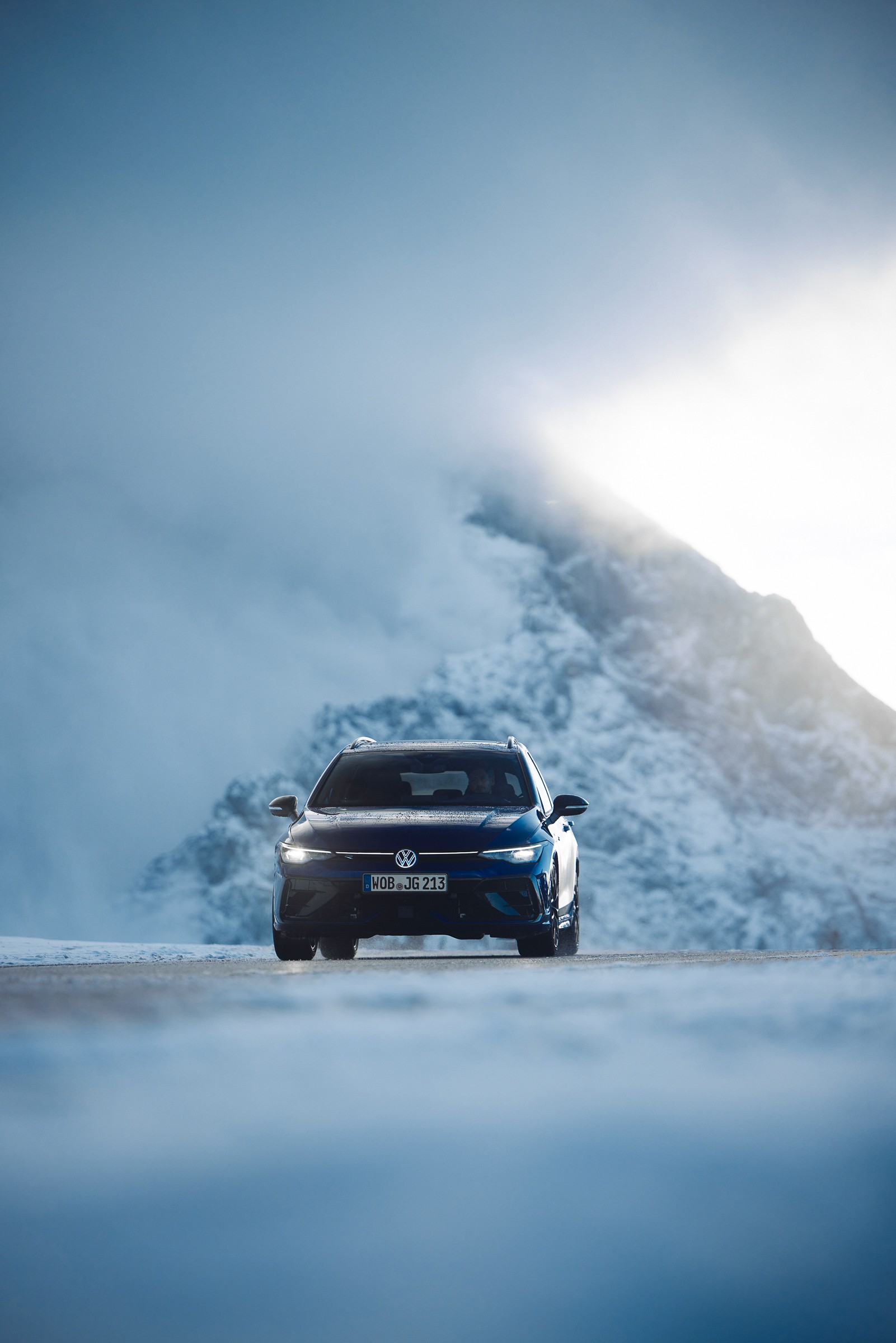
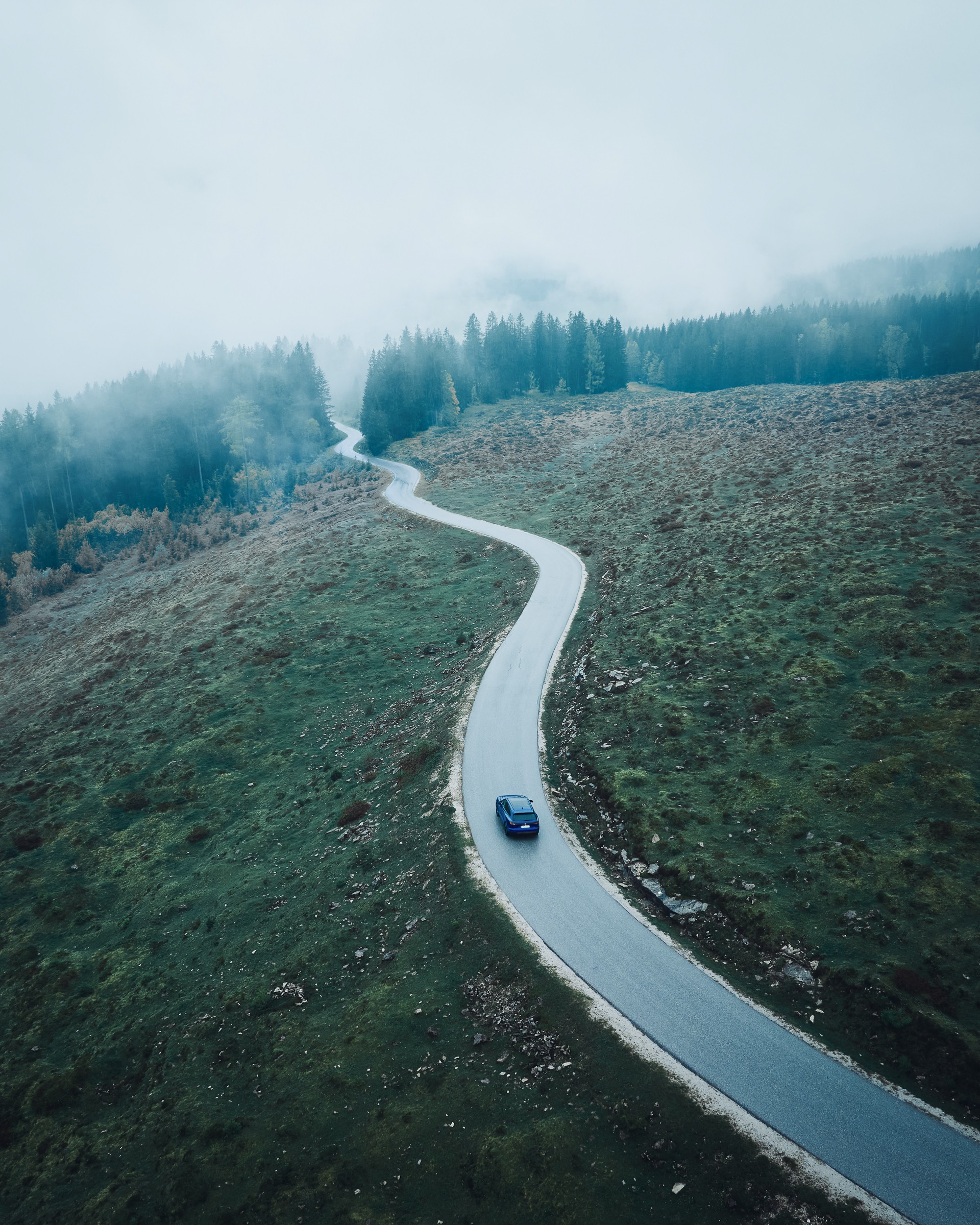
- Visual & Experience DifferentiationFrom warm, family-oriented Volkswagen imagery → to a cooler, more atmospheric visual world (northern landscapes, dusk/dawn lighting, minimal and focused compositions) From track-based events → to premium, lifestyle-driven, multi-sensory experiences
- Emotional Direction - Main NarrativeFrom loud, aggressive, and competitive → to a balance of energy and controlopportunity for VW R to differentiate from VW (educational & functional communication) through escapism, emotion, and experience-driven storytelling.
Final Solution
The brand is not defined by fixed executions
but by a system that translates values into adaptable expressions.
A three-layer system connects brand values to expression and experience — ensuring consistency while enabling flexibility across contexts.
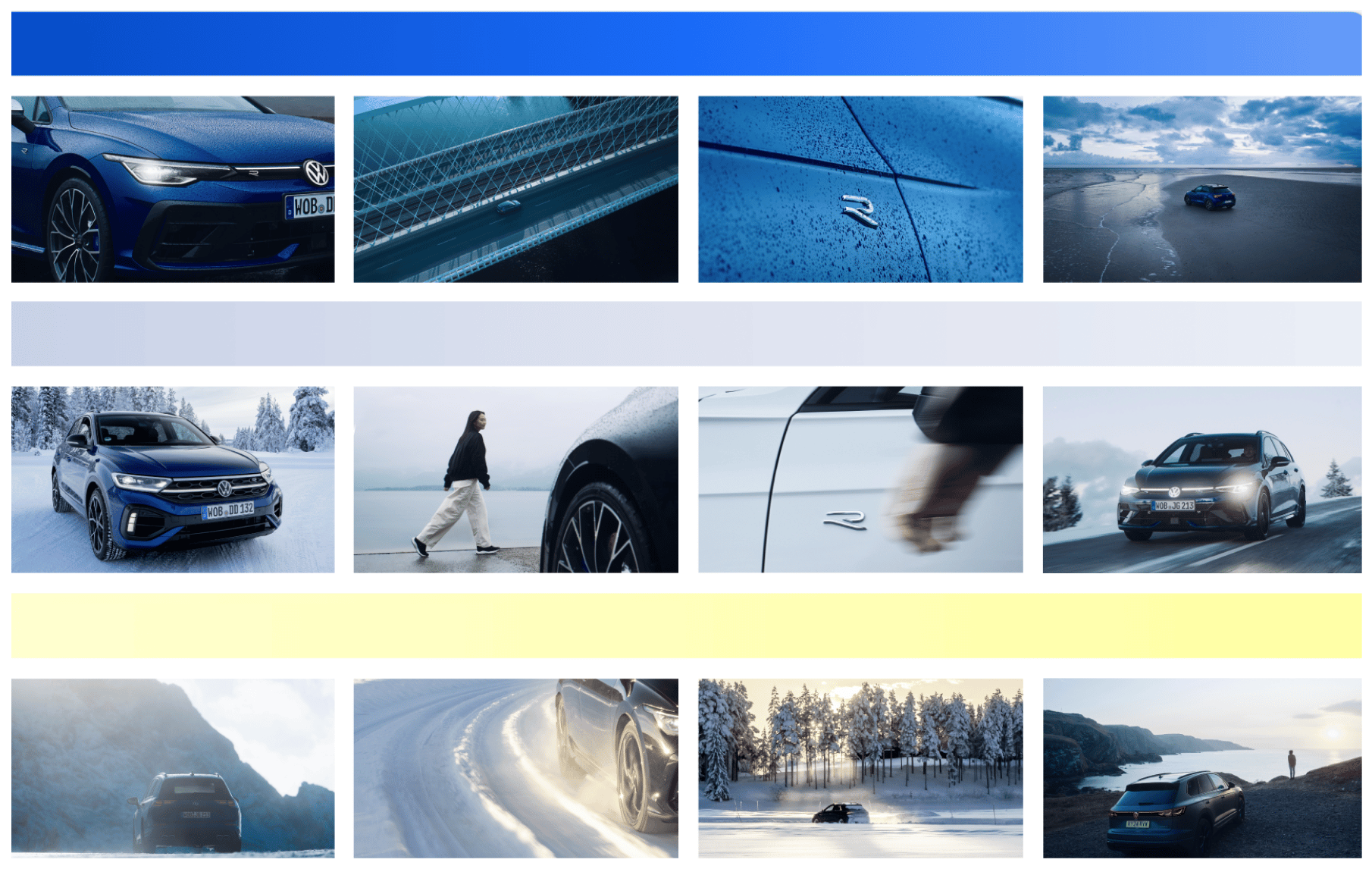
Creating a Distinct Visual Atmosphere
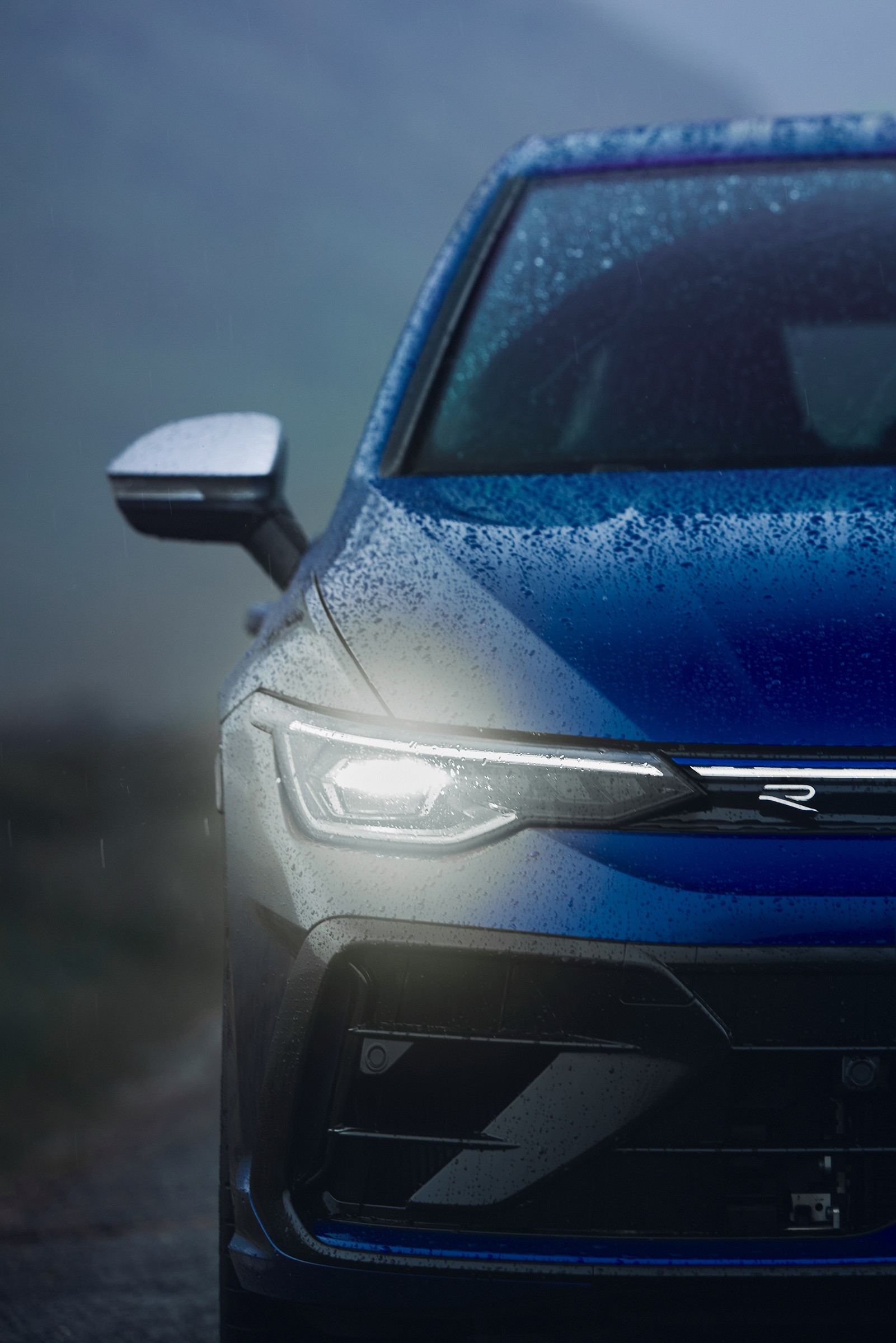
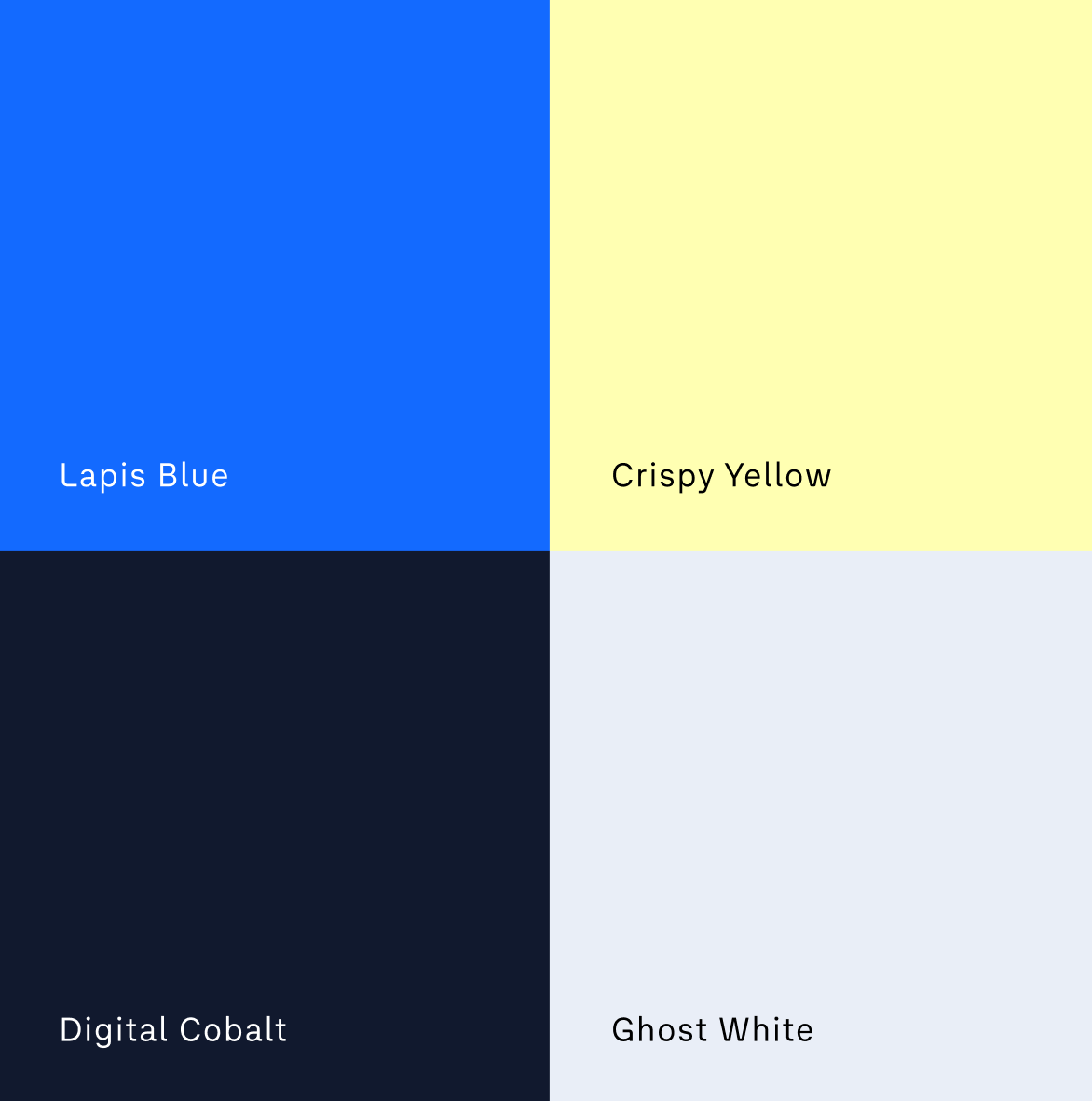
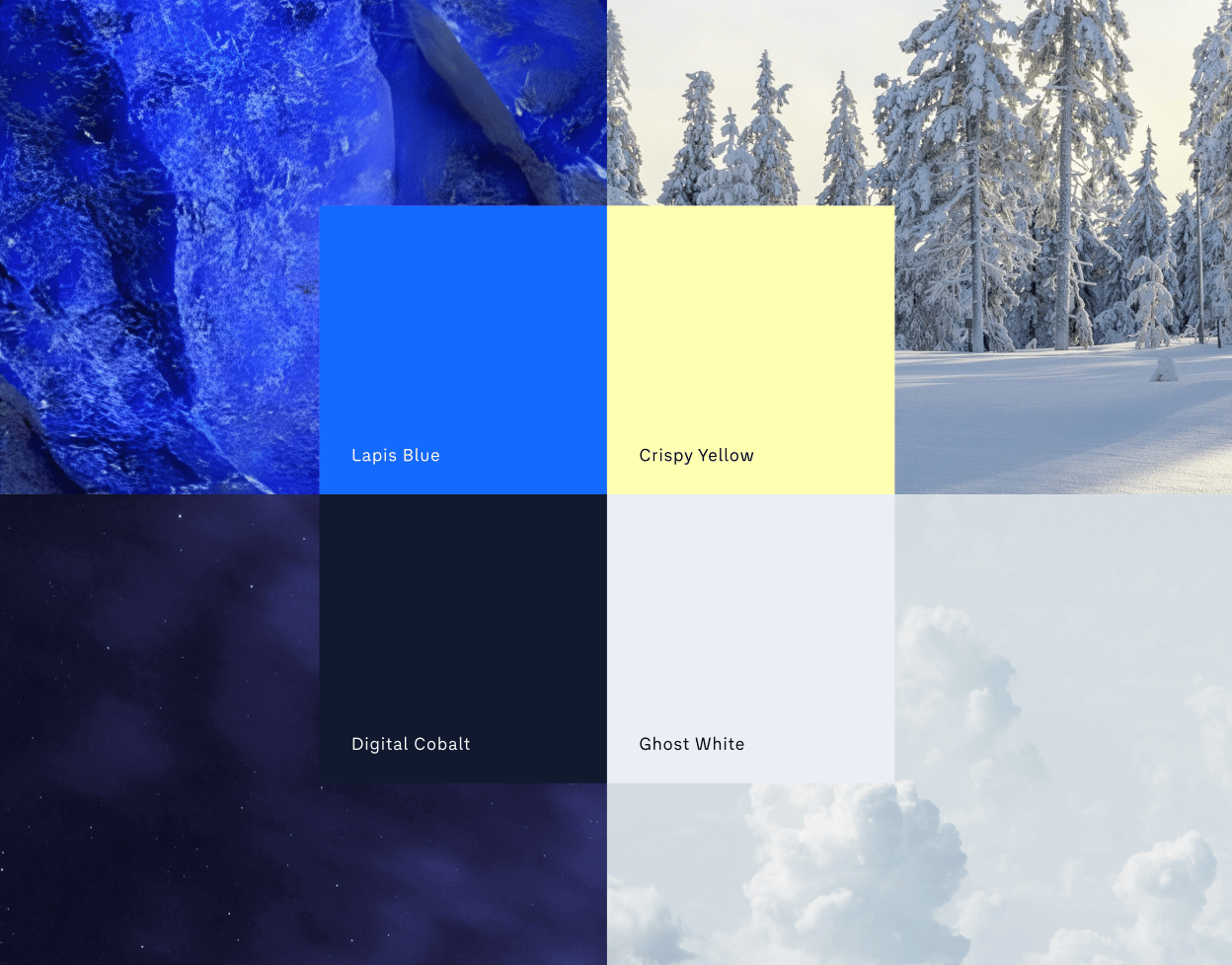
The brand shifts from warm, social imagery to a colder, more atmospheric visual language — emphasizing control, focus, and individual experience. Isolated compositions and natural environments shift the focus from social interaction to individual experience.
Refined Material Language
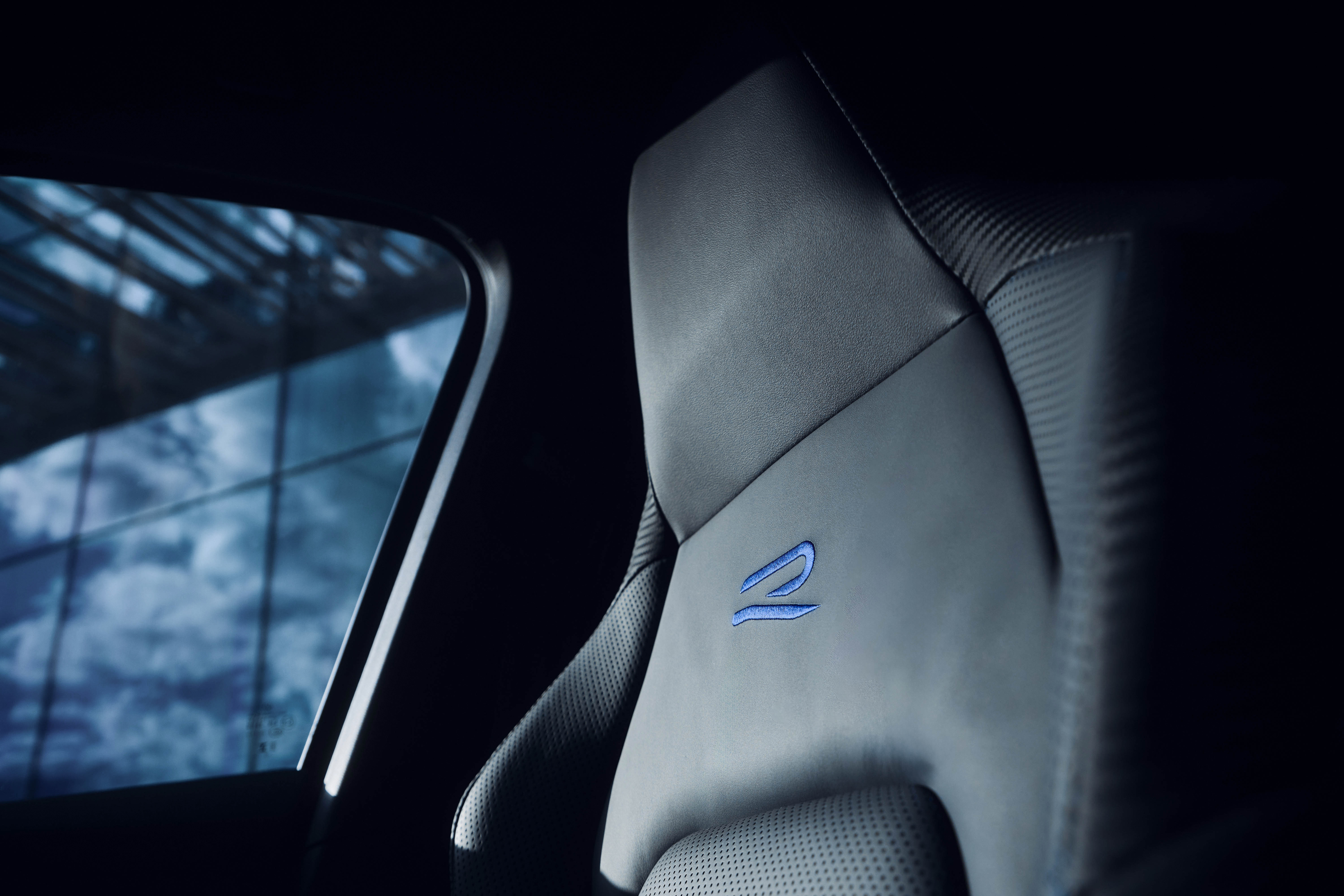
Materials define the tactile expression of the brand — balancing cold, technical surfaces with soft, natural textures to create a refined and controlled atmosphere.
Designing a Multi-Sensory Expression
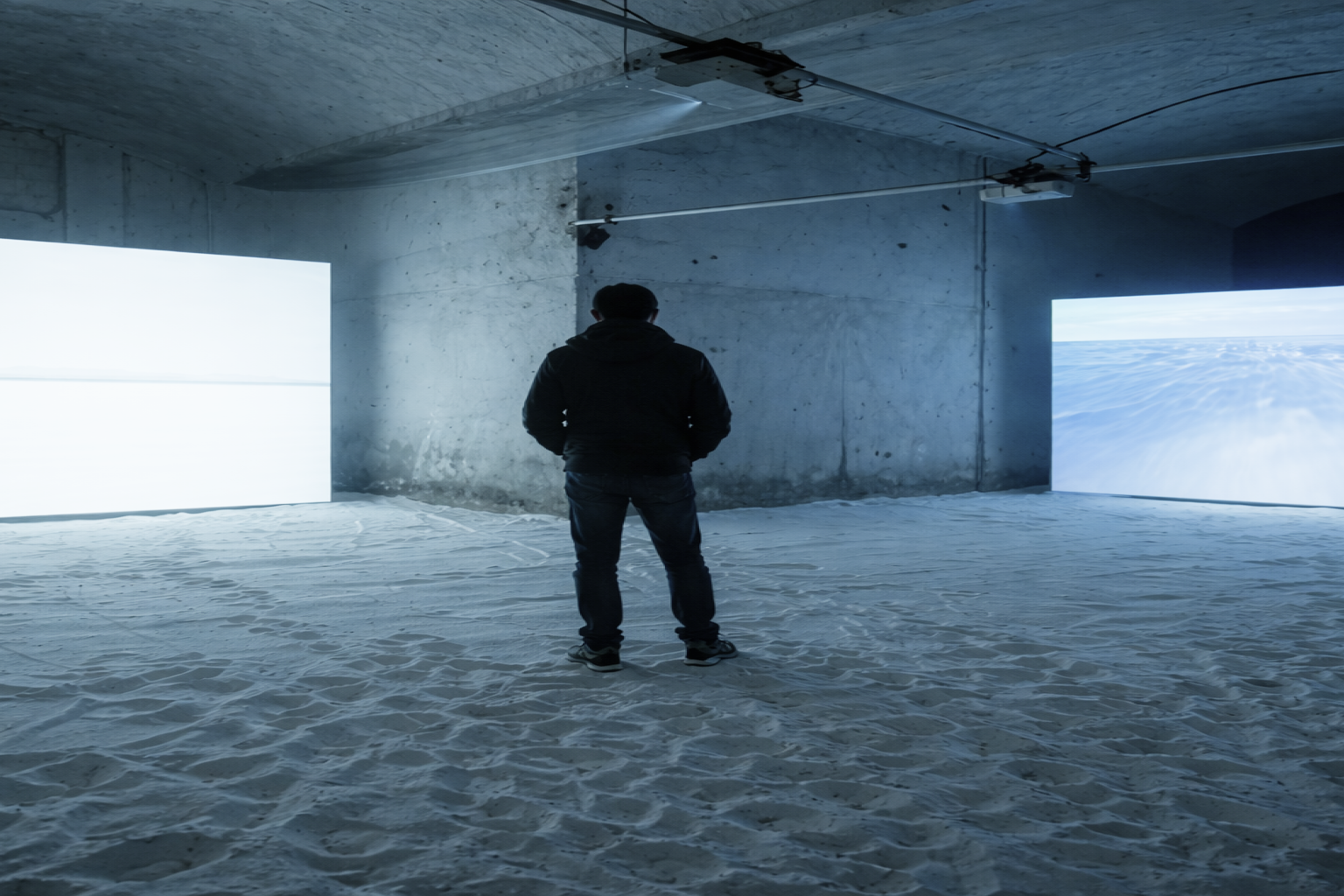
The brand shifts from visual expression to a multi-sensory experience. Natural elements define the spatial foundation, while scent and sound introduce subtle, controlled layers of immersion — reinforcing the balance between energy and focus.
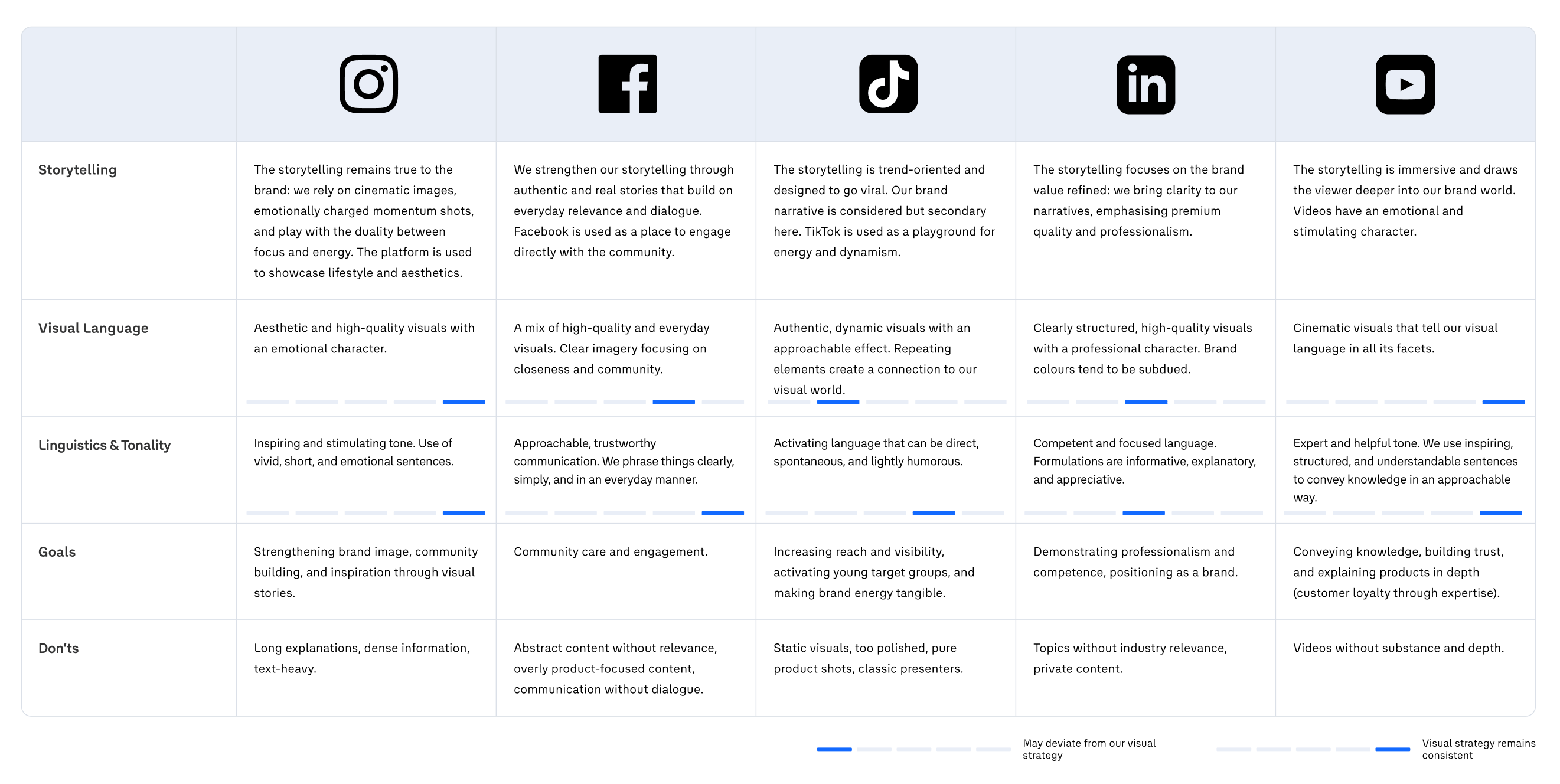
Translating the expression system across platforms
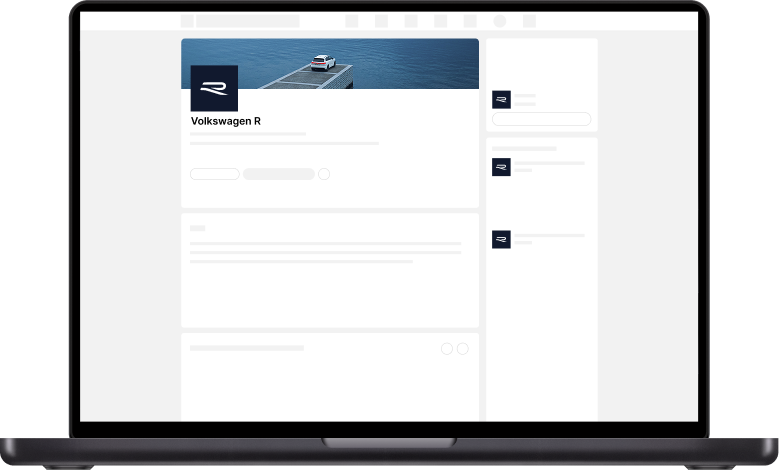
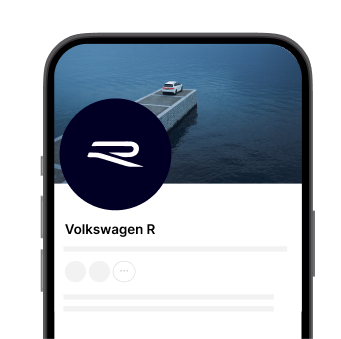
The expression system ensures a consistent brand presence across all platforms while adapting to different formats and contexts. Visual language, tone of voice, and composition are subtly adjusted for each platform, while the core elements remain consistent — creating a unified brand experience from social media to web and digital interfaces.
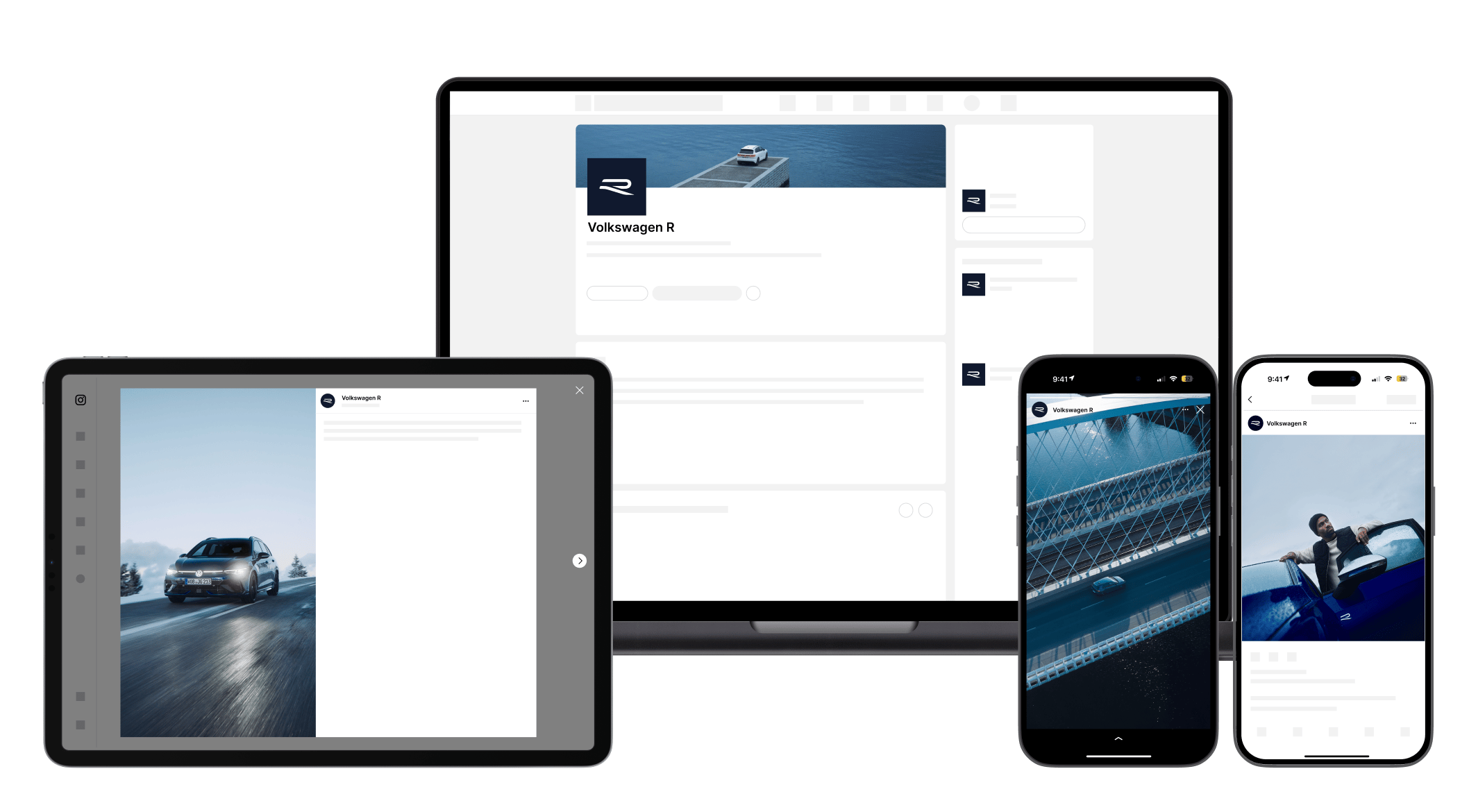
Application matrix across platforms and expression elements
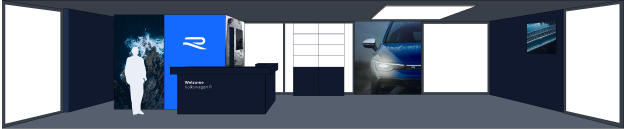
Translating the brand system into spatial experience
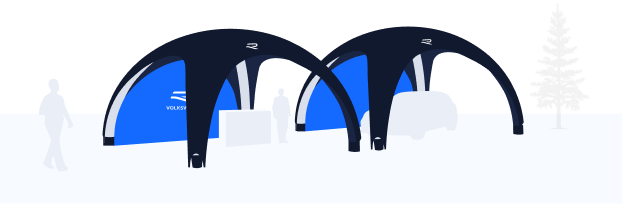
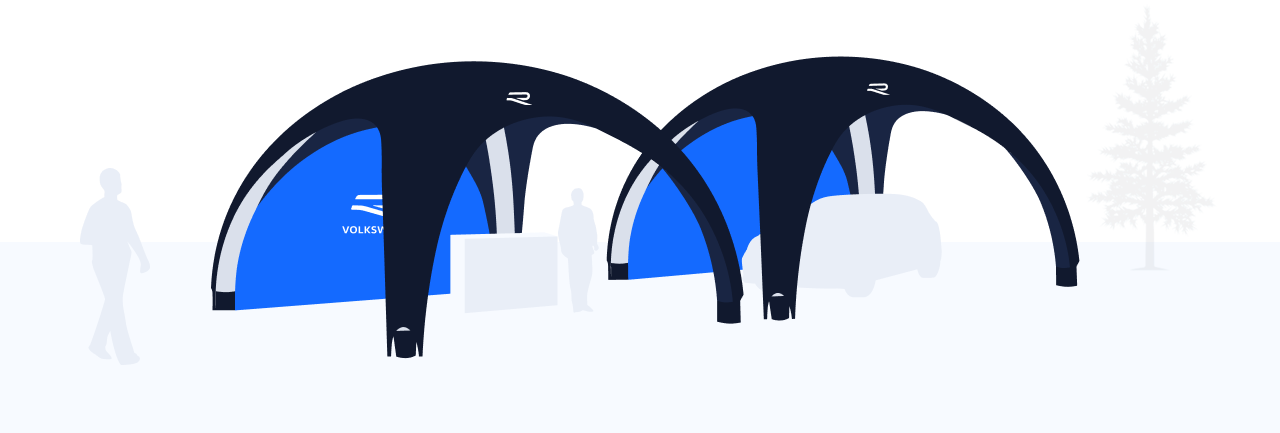
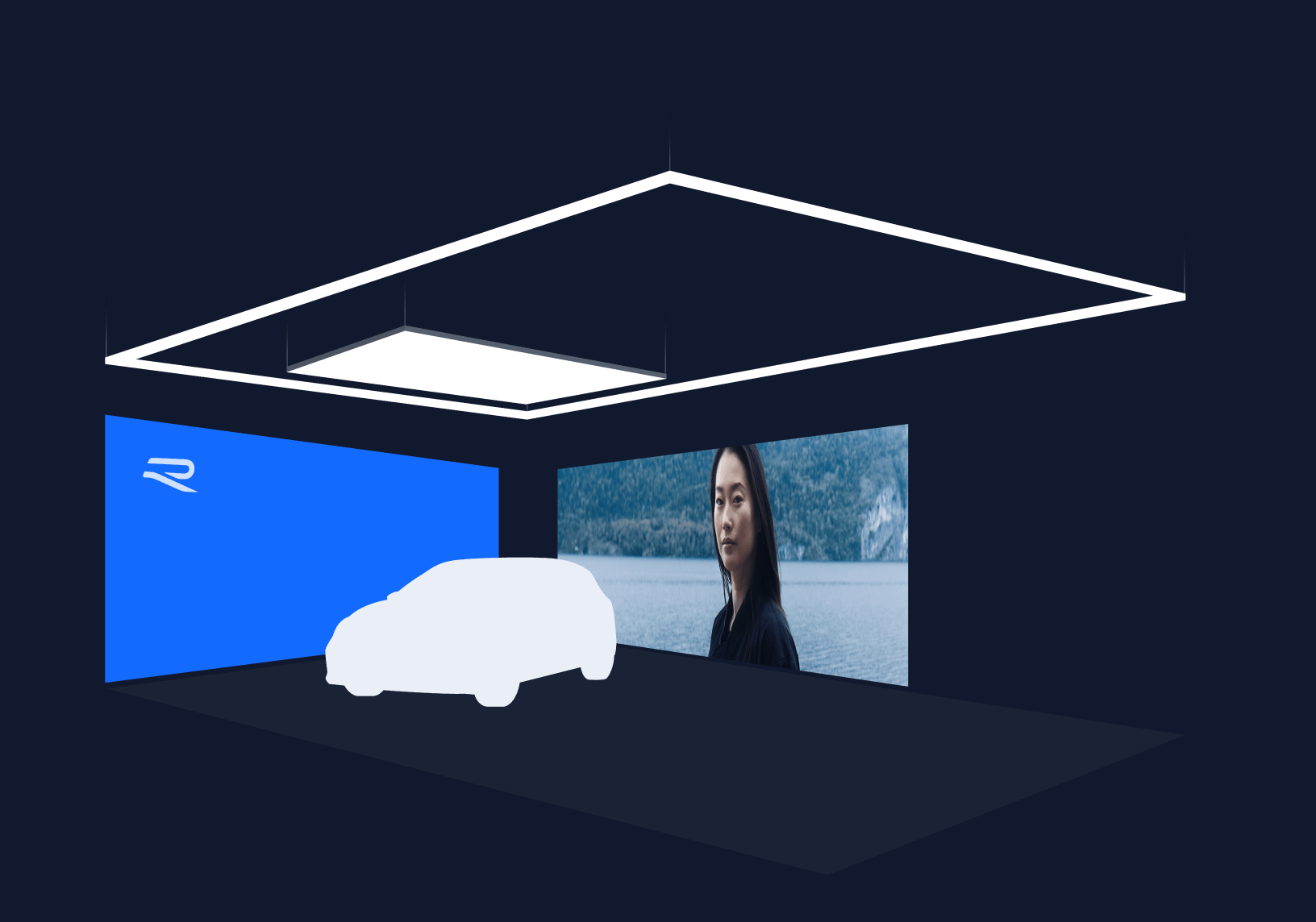
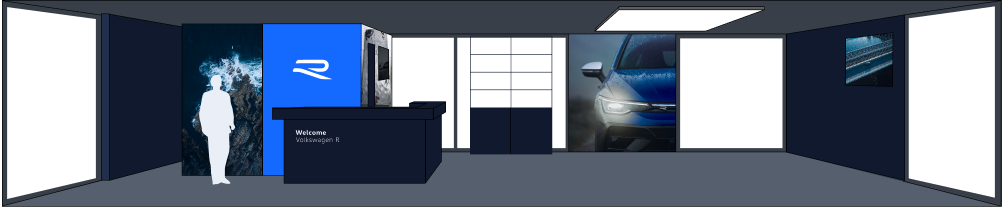
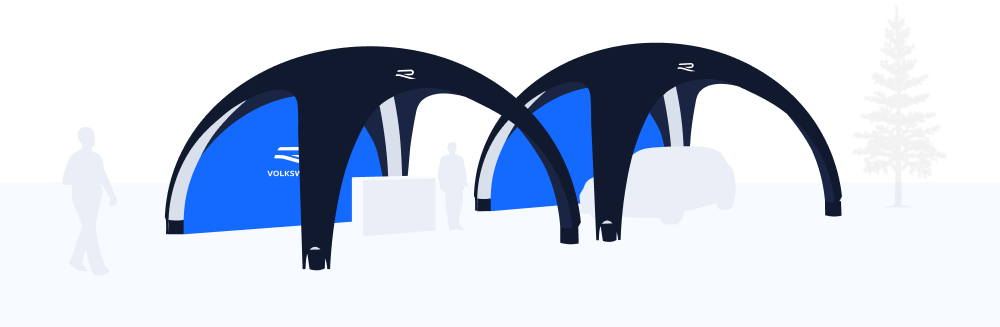
The space is designed as a physical extension of the brand system — translating visual and narrative principles into a clear spatial logic. Instead of fixed designs, a modular system defines how elements such as layout, materials, lighting, and content are applied. This ensures a consistent “R feeling” across different formats while allowing flexibility depending on context, scale, and purpose.
Designing immersive brand interactions
Interaction design translates the brand values into active experiences — allowing visitors to engage with the brand beyond passive observation. Instead of isolated activations, a modular system defines different types of interaction — ranging from immersive environments to subtle moments of engagement. Each activation is designed to evoke the “R feeling” through focus, atmosphere, and controlled intensity.
Application logic across formats
To ensure consistency across diverse formats, the brand system is translated into a structured application logic.
- Each event type is defined by a distinct value focus — shaping how visual expression, spatial design, and interactions are applied.
- Rather than designing individual events, this framework enables scalable and repeatable experiences that remain consistent while adapting to context, audience, and purpose.
Final Impact
The system was directly implemented as the foundation for initial photoshoots and exhibitions, and used as a briefing framework for creative agencies — enabling immediate, consistent execution across touchpoints
Reflection
The biggest challenge was aligning many different stakeholder opinions while balancing two opposing needs: staying close enough to the Volkswagen core brand, while creating enough differentiation for Volkswagen R. This project showed me that design decisions at this level need to be clearly reasoned, traceable, and defensible — especially when many stakeholders bring strong personal opinions.
Next
Continue supporting teams as strategic sparring partners in the application of the system across real projects — from campaigns to event planning, including formats such as the 24h Nürburgring.
Case Study
Building a
Multisensory
Brand Experience
Repositioning Volkswagen R from a racing sub-brand into a distinct premium experience — enabling consistent execution and stronger differentiation in the premium segment.
Alive
Refined
Genuine
Brand Values
Platforms & Events
Brand Experience


Brand Expression
Multisensory Expression



Context

Volkswagen R, the performance sub-brand of Volkswagen, faced a strategic shift from combustion-engine racing heritage to electric mobility. While the core brand evolved, Volkswagen R lacked a clear and differentiated identity — especially for a new premium-oriented audience. The project focused on creating a consistent, scalable brand experience system across digital and physical touchpoints.
Project Partner
Volkswagen R
Duration
8 months
Topics
Branding, Strategy, Experience Design,
Role
Strategic Designer
My Role & Process
My Role
My role on this project was as Experience and Strategic Designer, I co-led the project end-to-end with one team member
- Responsible for stakeholder management, concept development, and delivery
- Presented and defended solutions to C-level stakeholders
- Worked directly with C-level, Product Development, and Marketing
- Co-moderated ideation and prototyping workshops
- Add-On: Independently planned and facilitated a strategic workshop on the EV transition
Process The whole project was defided in two parts after each other (Defining the Styleguide & Guideline for Events & Exhibitions):
- Research & Analysis - Focused on building a deep understanding of the brand, market context, and existing inconsistencies.
- Strategic Framing - Defined the foundation for differentiation and future brand direction.
- Concept Development & Iteration - Translated strategy into tangible directions through an iterative design process.
- System Design (Solution)- Built a comprehensive brand system to ensure consistent and scalable execution.
- Implementation & Enablement - Ensured adoption and long-term usability of the system.
Problem Statement
- Lack of a consistent brand identity across touchpoints
No unified brand system existed across platforms, resulting in fragmented execution. External agencies operated without clear guidance, leading to inconsistent outcomes across markets, formats, and channels.
- Insufficient differentiation from the core Volkswagen brand
As a sub-brand, Volkswagen R is closely tied to Volkswagen’s standards — limiting its ability to establish a distinct identity. This lack of differentiation made it difficult to position VW R as a standalone premium brand.
Challenge
Create a distinct and premium brand identity while staying aligned with core Volkswagen brand.
Core tension:
- Differentiate without disconnecting from the parent brand
- Transition from racing niche → premium performance audience (external and internal)
- Enable consistency across highly diverse contexts (digital, events, global teams)
Research & Insights
Goal of the Phase
Build a fact-based understanding of the market, brand landscape, and current inconsistencies.
Methods used
→ Competitive Benchmarking – Analysis of Volkswagen Group brands and external competitors
→ Brand Touchpoint Audit - Review of existing touchpoints: social media platforms, event formats, event equipment, website
→ Desk Research - Exploration of trends in sustainability, branding, and event design to inform future-oriented solutions
→ Expert Interviews - Interviews with specialists in branding, events, and sustainability to gain industry insights
→ Internal Strategy Analysis – Review of internal documents including personas, target groups, and strategic transformation
Selected Deep Dive
Deep Dive: Mapping Event & Exhibition Ecosystems
ApproachAnalyzed all existing Volkswagen R events and exhibitions and mapped them across key dimensions, including format (e.g. trade fair, brand event, racing event), audience, scale, frequency, and purpose. Based on this, events were clustered into distinct categories to identify patterns, requirements, and opportunities for differentiation.
The same approach was applied to digital platforms to ensure a consistent understanding across all touchpoints.

Fig. 1: Matrix of all events and exhibitions; Fig. 2: Cluster of event formats and their goal and focus
Impact
Provided a structured understanding of event types, their goals, and requirements — forming the foundation for scalable guidelines and experience design decisions.
Key Insights
- Overemphasis on functional & educational brand communicationVolkswagen’s communication is primarily focused on functional and educational messaging, with limited emotional or immersive brand experiences.
Sustainability is underutilizedNot systematically integrated into current event and exhibition design.
Brand expression is fragmentedInconsistent tone, visuals, and formats weaken brand perception.
Core inisght
Multisensory experience as a key differentiatorPremium brands increasingly leverage multisensory design (e.g. space, sound, materiality) to create emotional and immersive experiences.
Strategic Decision
Goal of the Phase
ranslate research insights into a clear strategic direction and an actionable brand identity that differentiates VolkswagenR from Volkswagen while remaining aligned with its core DNA.
Methods used
→ Synthesis & strategy workshops – collaborative sessions to align on key insights and define a shared strategic direction
→ Development of principle frameworks – structured framework based on the brand model to guide decision-making
→ Development of brand positioning & value system – Defining the core positioning the brand values as a foundation
→ Iterative stakeholder validation – Continuous alignment and feedback loops with stakeholders
Selected Deep Dive
Deep Dive: A Dynamic Brand Value System
ApproachTo enable flexibility without losing consistency, the brand is built on three core values:
- Alive → energy, movement, dynamism
- Refined → control, precision, premium quality
- Genuine → authenticity, community, shared mindset
These values are not fixed — they function as a dynamic system. All three are always present. One can dominate depending on context. The balance shifts across platforms, content, and experiences
132

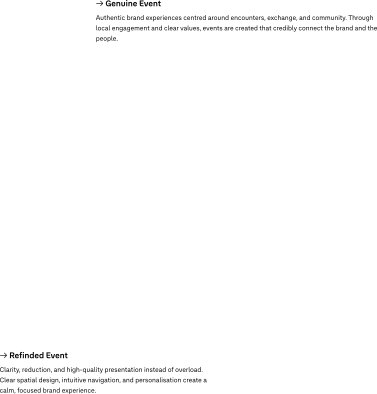



Fig. : Three Brand values as expressions direction and the different Event Formats
Impact
This system allowed the brand to:
- Stay recognizable across all touchpoints
- Adapt to very different formats and audiences
- Provide clear guidance for decision-making
Strategic Direction
- Adaptable Brand LogicBrand expression adapts based on context using a dynamic balance of core values + diffenret event formats. Instead of fixed guidelines → creation of a flexible, principle-based system
- Repositioning PerformanceFrom racing-focused, external performance → to personal, introspective performance (“Be who you are” as the core narrative) From niche racing enthusiasts → to a premium, self-driven audience valuing focus, individuality, and refined experiences
- Visual & Experience DifferentiationFrom warm, family-oriented Volkswagen imagery → to a cooler, more atmospheric visual world (northern landscapes, dusk/dawn lighting, minimal and focused compositions) From track-based events → to premium, lifestyle-driven, multi-sensory experiences
- Emotional Direction - Main NarrativeFrom loud, aggressive, and competitive → to a balance of energy and controlopportunity for VW R to differentiate from VW (educational & functional communication) through escapism, emotion, and experience-driven storytelling.
Final Solution
The brand is not defined by fixed executions
but by a system that translates values into adaptable expressions.
A three-layer system connects brand values to expression and experience — ensuring consistency while enabling flexibility across contexts.
Creating a Distinct Visual Atmosphere
The brand shifts from warm, social imagery to a colder, more atmospheric visual language — emphasizing control, focus, and individual experience. Isolated compositions and natural environments shift the focus from social interaction to individual experience.
Refined Material Language
Materials define the tactile expression of the brand — balancing cold, technical surfaces with soft, natural textures to create a refined and controlled atmosphere.
Designing a Multi-Sensory Expression
The brand shifts from visual expression to a multi-sensory experience. Natural elements define the spatial foundation, while scent and sound introduce subtle, controlled layers of immersion — reinforcing the balance between energy and focus.
Translating the expression system across platforms
The expression system ensures a consistent brand presence across all platforms while adapting to different formats and contexts. Visual language, tone of voice, and composition are subtly adjusted for each platform, while the core elements remain consistent — creating a unified brand experience from social media to web and digital interfaces.
Application matrix across platforms and expression elements
Translating the brand system into spatial experience
The space is designed as a physical extension of the brand system — translating visual and narrative principles into a clear spatial logic. Instead of fixed designs, a modular system defines how elements such as layout, materials, lighting, and content are applied. This ensures a consistent “R feeling” across different formats while allowing flexibility depending on context, scale, and purpose.
Designing immersive brand interactions
Interaction design translates the brand values into active experiences — allowing visitors to engage with the brand beyond passive observation. Instead of isolated activations, a modular system defines different types of interaction — ranging from immersive environments to subtle moments of engagement. Each activation is designed to evoke the “R feeling” through focus, atmosphere, and controlled intensity.

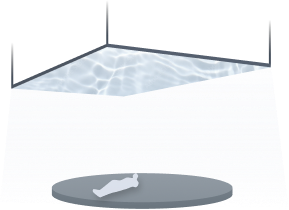



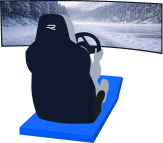
Immersive environments (sound/sense)
Nature as a spatial element
Shift perspective
Mixed reality
Racing for experience
Interactive surfaces
Application logic across formats
To ensure consistency across diverse formats, the brand system is translated into a structured application logic.
- Each event type is defined by a distinct value focus — shaping how visual expression, spatial design, and interactions are applied.
- Rather than designing individual events, this framework enables scalable and repeatable experiences that remain consistent while adapting to context, audience, and purpose.
Final Impact
The system was directly implemented as the foundation for initial photoshoots and exhibitions, and used as a briefing framework for creative agencies — enabling immediate, consistent execution across touchpoints
Reflection
The biggest challenge was aligning many different stakeholder opinions while balancing two opposing needs: staying close enough to the Volkswagen core brand, while creating enough differentiation for Volkswagen R. This project showed me that design decisions at this level need to be clearly reasoned, traceable, and defensible — especially when many stakeholders bring strong personal opinions.
Next
Continue supporting teams as strategic sparring partners in the application of the system across real projects — from campaigns to event planning, including formats such as the 24h Nürburgring.
Félix Deraed
Strategic Designer

Berlin, Germany
Currently
Strategic & Experience Designer
at Volkswagen Group Services GmbH

Case Study
Building a Multisensory
Brand Experience
Repositioning Volkswagen R from a racing sub-brand into a distinct premium experience
— enabling consistent execution and stronger differentiation in the premium segment.
Alive
Refined
Genuine
Brand Values
Platforms & Events
Brand Experience
Brand Expression
Multisensory Expression
Context

Volkswagen R, the performance sub-brand of Volkswagen, faced a strategic shift from combustion-engine racing heritage to electric mobility. While the core brand evolved, Volkswagen R lacked a clear and differentiated identity — especially for a new premium-oriented audience. The project focused on creating a consistent, scalable brand experience system across digital and physical touchpoints.
Project Partner
Volkswagen R
Duration
8 months
Topics
Branding, Strategy, Experience Design,
Role
Strategic Designer
My Role & Process
My Role
My role on this project was as Experience and Strategic Designer, I co-led the project end-to-end with one team member
- Responsible for stakeholder management, concept development, and delivery
- Presented and defended solutions to C-level stakeholders
- Worked directly with C-level, Product Development, and Marketing
- Co-moderated ideation and prototyping workshops (4+ Workshops)
- Add-On: Independently planned and facilitated a strategic workshop on the EV transition
Process The whole project was defided in two parts after each other (Defining the Styleguide & Guideline for Events & Exhibitions):
- Research & Analysis - Focused on building a deep understanding of the brand, market context, and existing inconsistencies.
- Strategic Framing - Defined the foundation for differentiation and future brand direction.
- Concept Development & Iteration - Translated strategy into tangible directions through an iterative design process.
- System Design (Solution)- Built a comprehensive brand system to ensure consistent and scalable execution.
- Implementation & Enablement - Ensured adoption and long-term usability of the system.


Research
Problem Phase
Challenge
Outcome
Solution Phase
Implementation
Strategic
Direction
Concept Developement
Validation
Application
Deliver


Focus and Intensity of Work: Styleguide
Focus and Intensity of Work: Event & Exhibition Guideline


Problem Statement
- Lack of a consistent brand identity across touchpoints
No unified brand system existed across platforms, resulting in fragmented execution. External agencies operated without clear guidance, leading to inconsistent outcomes across markets, formats, and channels.
- Insufficient differentiation from the core Volkswagen brand
As a sub-brand, Volkswagen R is closely tied to Volkswagen’s standards — limiting its ability to establish a distinct identity. This lack of differentiation made it difficult to position VW R as a standalone premium brand.
Challenge
Create a distinct and premium brand identity while staying aligned with core Volkswagen brand.
Core tension:
- Differentiate without disconnecting from the parent brand
- Transition from racing niche → premium performance audience (external and internal)
- Enable consistency across highly diverse contexts (digital, events, global teams)
Research & Insights
Goal of the Phase
Build a fact-based understanding of the market, brand landscape, and current inconsistencies.
Methods used
→ Competitive Benchmarking – Analysis of Volkswagen Group brands and external competitors
→ Brand Touchpoint Audit - Review of existing touchpoints: social media platforms, event formats, event equipment, website
→ Desk Research - Exploration of trends in sustainability, branding, and event design to inform future-oriented solutions
→ Expert Interviews - Interviews with specialists in branding, events, and sustainability to gain industry insights
→ Internal Strategy Analysis – Review of internal documents including personas, target groups, and strategic transformation
Selected Deep Dive
Deep Dive: Mapping Event & Exhibition Ecosystems
ApproachAnalyzed all existing Volkswagen R events and exhibitions and mapped them across key dimensions, including format (e.g. trade fair, brand event, racing event), audience, scale, frequency, and purpose. Based on this, events were clustered into distinct categories to identify patterns, requirements, and opportunities for differentiation.
The same approach was applied to digital platforms to ensure a consistent understanding across all touchpoints.
Fig. 1: Matrix of all events and exhibitions; Fig. 2: Cluster of event formats and their goal and focus
Impact
Provided a structured understanding of event types, their goals, and requirements — forming the foundation for scalable guidelines and experience design decisions.
Key Insights
- Overemphasis on functional & educational brand communicationVolkswagen’s communication is primarily focused on functional and educational messaging, with limited emotional or immersive brand experiences.
Sustainability is underutilizedNot systematically integrated into current event and exhibition design.
Brand expression is fragmentedInconsistent tone, visuals, and formats weaken brand perception.
Core inisght
Multisensory experience as a key differentiatorPremium brands increasingly leverage multisensory design (e.g. space, sound, materiality) to create emotional and immersive experiences.
Strategic Decision
Goal of the Phase
ranslate research insights into a clear strategic direction and an actionable brand identity that differentiates VolkswagenR from Volkswagen while remaining aligned with its core DNA.
Methods used
→ Synthesis & strategy workshops – collaborative sessions to align on key insights and define a shared strategic direction
→ Development of principle frameworks – structured framework based on the brand model to guide decision-making
→ Development of brand positioning & value system – Defining the core positioning the brand values as a foundation
→ Iterative stakeholder validation – Continuous alignment and feedback loops with stakeholders
Selected Deep Dive
Deep Dive: A Dynamic Brand Value System
ApproachTo enable flexibility without losing consistency, the brand is built on three core values:
- Alive → energy, movement, dynamism
- Refined → control, precision, premium quality
- Genuine → authenticity, community, shared mindset
These values are not fixed — they function as a dynamic system. All three are always present. One can dominate depending on context. The balance shifts across platforms, content, and experiences
132

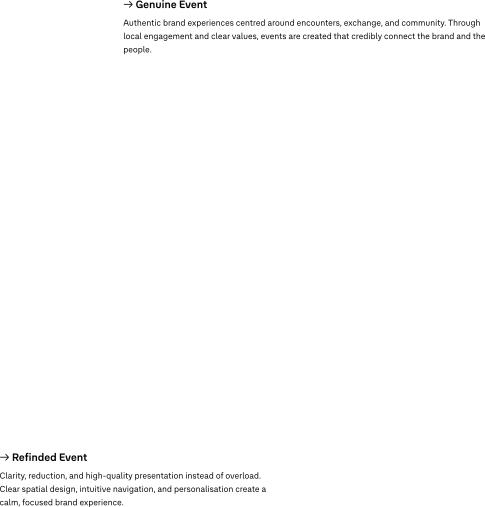



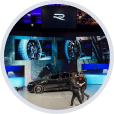
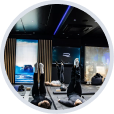
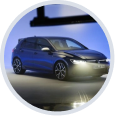
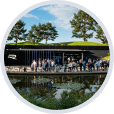


Fig. : Three Brand values as expressions direction and the different Event Formats
Impact
This system allowed the brand to:
- Stay recognizable across all touchpoints
- Adapt to very different formats and audiences
- Provide clear guidance for decision-making
Strategic Direction
- Adaptable Brand LogicBrand expression adapts based on context using a dynamic balance of core values + diffenret event formats. Instead of fixed guidelines → creation of a flexible, principle-based system
- Repositioning PerformanceFrom racing-focused, external performance → to personal, introspective performance (“Be who you are” as the core narrative) From niche racing enthusiasts → to a premium, self-driven audience valuing focus, individuality, and refined experiences
- Visual & Experience DifferentiationFrom warm, family-oriented Volkswagen imagery → to a cooler, more atmospheric visual world (northern landscapes, dusk/dawn lighting, minimal and focused compositions) From track-based events → to premium, lifestyle-driven, multi-sensory experiences
- Emotional Direction - Main NarrativeFrom loud, aggressive, and competitive → to a balance of energy and controlopportunity for VW R to differentiate from VW (educational & functional communication) through escapism, emotion, and experience-driven storytelling.
Final Solution
The brand is not defined by fixed executions
but by a system that translates values into adaptable expressions.
A three-layer system connects brand values to expression and experience — ensuring consistency while enabling flexibility across contexts.
Brand Values

define
Brand Expression

shape
Brand Experience
Define what the brand stands for — Alive, Refined, and Genuine. Independent of medium or format, these values remain constant while varying in dominance depending on context.
Translates brand values into visual and narrative expression - defining how the brand looks, speaks, and behaves across image, tone of voice, and interaction.
All experiences are built on the same system, adapting to context - from digital platforms to physical environments, including spatial design, atmosphere, and interactions.


- Brand Expression
- Brand Experience
Creating a Distinct Visual Atmosphere
The brand shifts from warm, social imagery to a colder, more atmospheric visual language — emphasizing control, focus, and individual experience. Isolated compositions and natural environments shift the focus from social interaction to individual experience.
Refined Material Language
Materials define the tactile expression of the brand — balancing cold, technical surfaces with soft, natural textures to create a refined and controlled atmosphere.
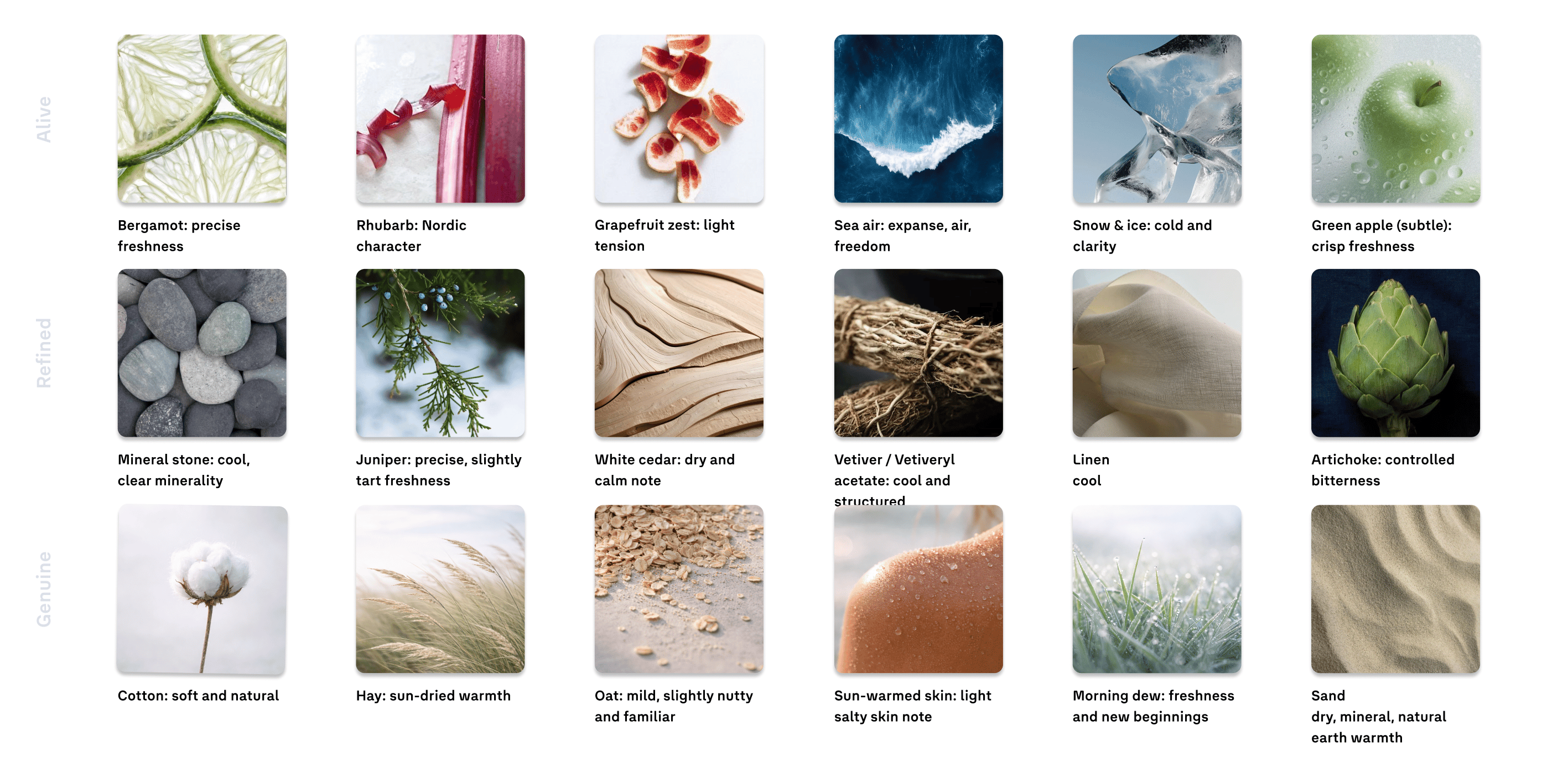
Designing a Multi-Sensory Expression
The brand shifts from visual expression to a multi-sensory experience. Natural elements define the spatial foundation, while scent and sound introduce subtle, controlled layers of immersion — reinforcing the balance between energy and focus.
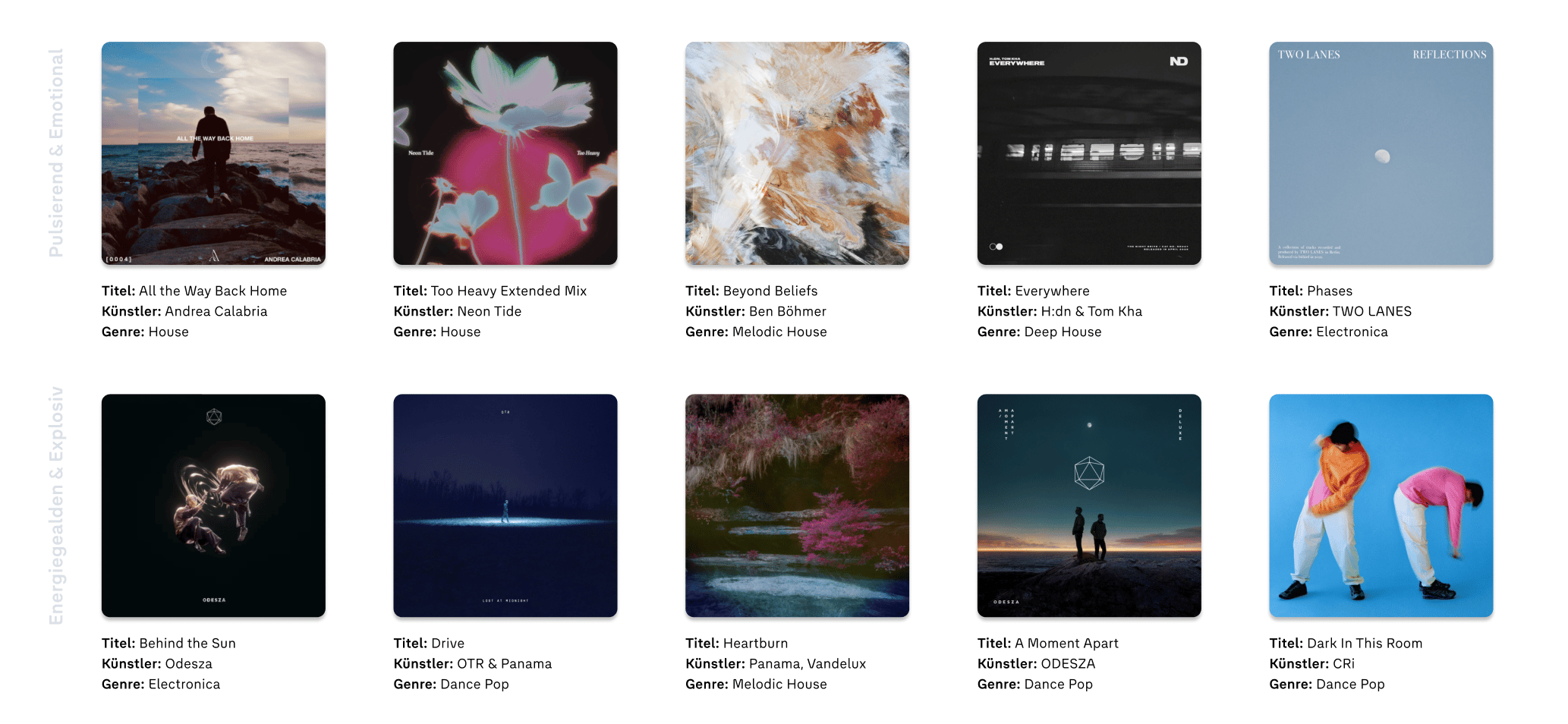
Sound Landscape
Sense


- Brand Expression
- Brand Experience
Translating the expression system across platforms
The expression system ensures a consistent brand presence across all platforms while adapting to different formats and contexts. Visual language, tone of voice, and composition are subtly adjusted for each platform, while the core elements remain consistent — creating a unified brand experience from social media to web and digital interfaces.
Application matrix across platforms and expression elements
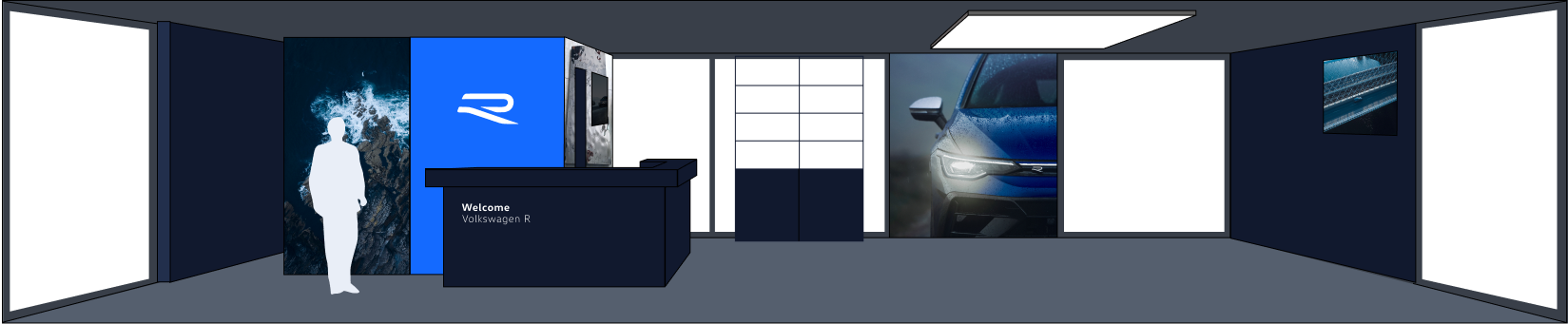
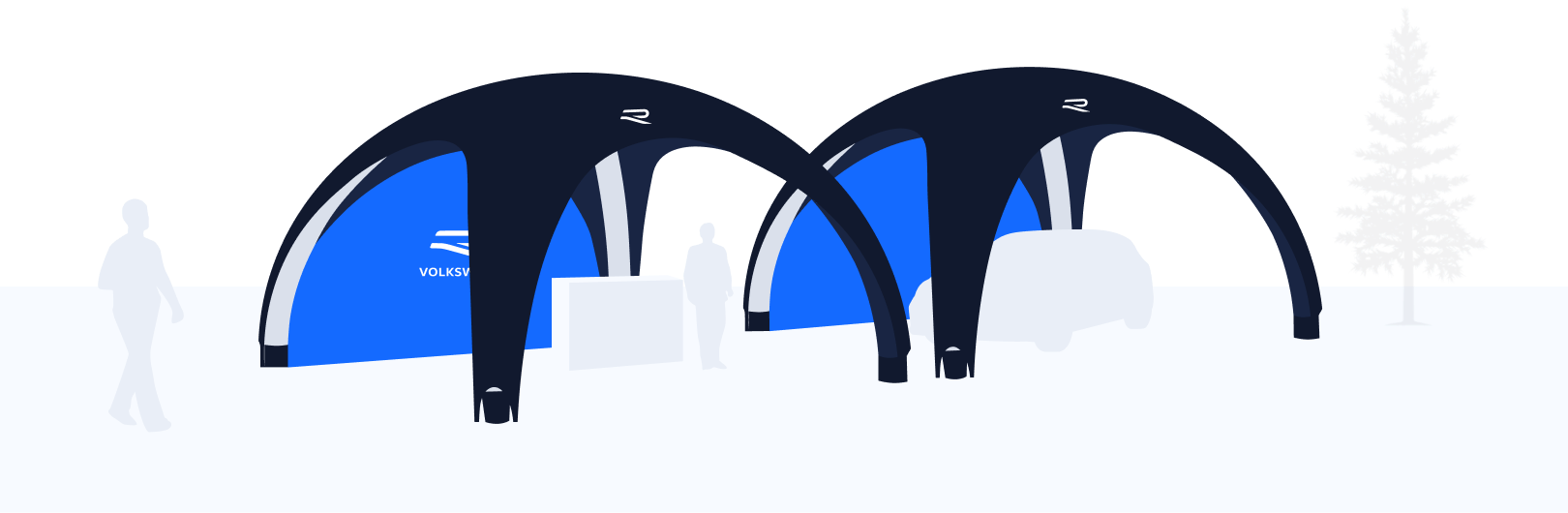
Translating the brand system into spatial experience
The space is designed as a physical extension of the brand system — translating visual and narrative principles into a clear spatial logic. Instead of fixed designs, a modular system defines how elements such as layout, materials, lighting, and content are applied. This ensures a consistent “R feeling” across different formats while allowing flexibility depending on context, scale, and purpose.
Designing immersive brand interactions
Interaction design translates the brand values into active experiences — allowing visitors to engage with the brand beyond passive observation. Instead of isolated activations, a modular system defines different types of interaction — ranging from immersive environments to subtle moments of engagement. Each activation is designed to evoke the “R feeling” through focus, atmosphere, and controlled intensity.

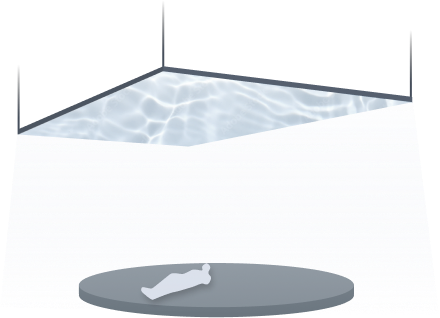
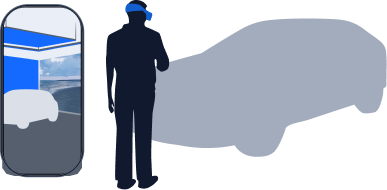


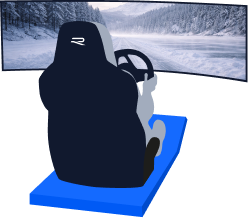
Immersive environments (sound/sense)
Nature as a spatial element
Shift perspective
Mixed reality
Racing for experience
Interactive surfaces
Application logic across formats
To ensure consistency across diverse formats, the brand system is translated into a structured application logic.
- Each event type is defined by a distinct value focus — shaping how visual expression, spatial design, and interactions are applied.
- Rather than designing individual events, this framework enables scalable and repeatable experiences that remain consistent while adapting to context, audience, and purpose.
Final Impact
The system was directly implemented as the foundation for initial photoshoots and exhibitions, and used as a briefing framework for creative agencies — enabling immediate, consistent execution across touchpoints
Reflection
The biggest challenge was aligning many different stakeholder opinions while balancing two opposing needs: staying close enough to the Volkswagen core brand, while creating enough differentiation for Volkswagen R. This project showed me that design decisions at this level need to be clearly reasoned, traceable, and defensible — especially when many stakeholders bring strong personal opinions.
Next
Continue supporting teams as strategic sparring partners in the application of the system across real projects — from campaigns to event planning, including formats such as the 24h Nürburgring.
Félix Deraed
Strategic Designer
Berlin, Germany
Currently
Strategic & Experience Designer
at Volkswagen Group Services GmbH
